
17 Brutally Honest Tips on LinkedIn Profile Optimization (That Work in 2026)

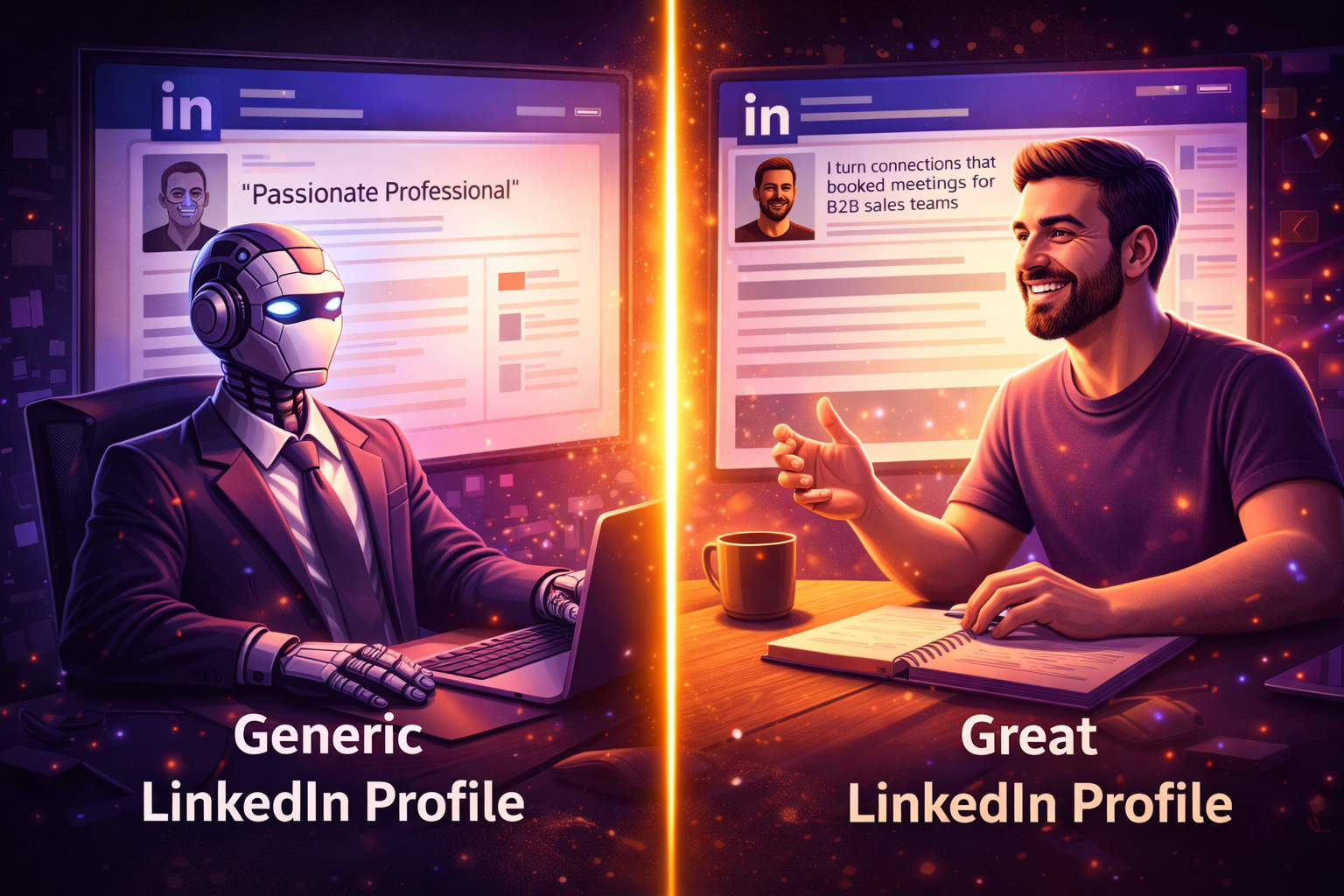
Your LinkedIn profile probably looks like everyone else's. Same generic headline. Same buzzword soup in the About section. Same "passionate professional seeking opportunities" energy.
And you know what? Nobody's reading it.
I've spent years building OmniCreator and helping thousands of people get noticed on LinkedIn. The problem isn't that you don't know what to put on your profile.
The problem is that all the tips on LinkedIn profile optimization out there make you sound like a corporate robot.
Here's what I learned:
A good profile gets you past the resume screening. A great profile makes people want to work with you.
Let me show you the difference.
Key Takeaways
Before we get into the weeds, here's what matters most about LinkedIn profile creation:
- Your headline isn't a job title , it's a promise of value
- Your About section should read like a conversation, not a cover letter
- Specific examples beat vague claims every single time
- LinkedIn rewards profiles that get engagement, so build for humans first
- The "perfect" profile matters less than showing up consistently
(That last one is why we built OmniCreator. But more on that later.)
What Is the 5-3-2 Rule on LinkedIn?
This is one of those LinkedIn "rules" that sounds impressive but makes content creation feel like homework.
The 5-3-2 rule says you should share 5 pieces of curated content, 3 pieces of original content, and 2 personal posts per week.
Does it work? Sure, if you're treating LinkedIn like a content assembly line.
Here's what works better:
Post when you have something worth saying. Share real insights from your work. Be specific about problems you've solved.
Quality beats arbitrary ratios every single time.
How to Make a Very Good LinkedIn Profile (Without Sounding Like Everyone Else)
1. Your Headline Is Your Best (and Only) First Impression
Stop listing your job title and company. Everyone can see that already.
Your headline should answer one question: "What's in it for me?"
Bad headline: "Marketing Manager at TechCorp"
Better headline: "I help B2B SaaS companies turn cold emails into booked meetings"
See the difference? One is a title. The other is a promise.
2. The Professional Photo That Doesn't Look Like a Mugshot
You need a clear headshot where you look like someone people would want to work with. Not a cropped wedding photo or a group shot where you circled yourself in MS Paint.
Just a clean photo where you're smiling (or at least not scowling) against a simple background.
Bonus points if the photo looks like you'd recognize this person at a networking event. Because that's literally the point.
3. Your About Section Isn't a Resume, It's a Conversation
This is where most LinkedIn profile creation efforts die.
Everyone writes their About section like they're applying to business school in 1997. Third person. Passive voice. Absolutely zero personality.
Here's my formula:
- First paragraph: What you do and who you help (specific)
- Second paragraph: How you got here (brief origin story)
- Third paragraph: What makes your approach different (this is your secret sauce)
- Fourth paragraph: What you're working on now + how to reach you
Write it like you're explaining your work to someone at a coffee shop. If you wouldn't say it out loud, don't write it.
4. The Experience Section: Show, Don't Tell
Instead of: "Responsible for managing social media accounts"
Try this: "Grew LinkedIn followers from 2,000 to 47,000 in 8 months by posting case studies from actual client work"
Specific numbers. Actual outcomes. Real examples.
Nobody cares that you "managed" something. They care what happened because you managed it.
5. Skills That Mean Something
LinkedIn lets you add 50 skills to your profile. Please don't add 50 skills to your profile.
Pick 5-10 skills you genuinely want to be known for. The ones you'd want someone to hire you for.
Then ask colleagues to endorse you for those specific skills. Not every skill. Just the ones that matter.
6. Recommendations From Real Humans Who Worked With You
One detailed, specific recommendation beats 20 generic "great to work with!" endorsements.
When asking for recommendations, make it easy. Tell them exactly what project or skill you'd like them to focus on.
"Hey Sarah, would you mind writing a quick LinkedIn recommendation focusing on the Q3 campaign we ran together? Specifically how we turned it around after that rough start."
Give them the story. They'll write it better.
7. The Featured Section Is Your Greatest Hits Album
LinkedIn lets you pin posts, articles, and media to the top of your profile. Use this.
Pin your best work. Case studies. Articles. That post that got 10,000 views. Anything that shows what you're capable of.
This is prime real estate. Don't waste it on your company's generic press release.
8. Custom URLs Aren't Just for Nerds
Change your LinkedIn URL from linkedin.com/in/sarah-johnson-47b8a2341 to linkedin.com/in/sarahjohnson.
It looks cleaner. It's easier to remember. And it takes 30 seconds.
Do it now. Seriously.
9. Your Background Photo Isn't Decoration
That banner image at the top of your profile is not just there to look pretty.
Use it to reinforce what you do. Show your portfolio if you're a designer. Share a relevant quote if you're a consultant. Display your book cover if you're an author.
Just don't leave it blank or use LinkedIn's generic blue pattern. You're better than that.
10. What Is the 4-1-1 Rule on LinkedIn?
The 4-1-1 rule says for every promotional post, share 4 pieces of curated content and 1 piece of original content.
Look, I get it. Nobody likes the person who only posts "buy my stuff."
But people follow you for your perspective, not for links to TechCrunch articles everyone already saw.
Share your actual thoughts. Tell real stories from your work. Be specific about what you've learned.
That's infinitely more valuable than ratios.
How Do I Improve My LinkedIn Profile? (The Honest Answer)
You improve your LinkedIn profile the same way you get better at anything: by using LinkedIn.
Post regularly. Engage with others. Share what you're learning. The algorithm rewards activity, and recruiters notice profiles that show up consistently.
Here's what I see all the time:
Someone spends 4 hours perfecting their profile, then never posts. Six months later, they wonder why nobody's reaching out.
Your profile is the foundation. But it's your activity that gets you noticed.
This is exactly why we built OmniCreator. Because optimizing your profile is step one. Showing up consistently is where the real magic happens.
How to Go from Profile to Presence with OmniCreator
Look, I could tell you that these tips on LinkedIn profile optimization will transform your career.
But we both know that's only half the equation.
The real game is staying consistent after you've built that perfect profile. And that's where most people fall apart.
With OmniCreator, you get:
- A media library that keeps every post, image, and video you've ever shared in one searchable place (try finding that fire post from six months ago in LinkedIn's native interface , I dare you)
- ChatGPT integration that interviews you about what you want to say, then helps you write posts that sound like you (not like every other LinkedIn bro using the same generic AI prompts)
- A real community of actual humans who engage with your content (not bots leaving "Great insights! 🔥" on posts about your grandma's funeral)
And it's $20/month. Not $199. Not $99. Twenty dollars.
Because the goal isn't to impress your CFO with your software budget. The goal is to show up on LinkedIn consistently without going bankrupt or losing your mind.
The Truth About LinkedIn Profiles Nobody Tells You
Here's what recruiters and hiring managers told me when I asked them about LinkedIn profiles:
They spend about 7 seconds on your profile. Maybe 10 if you've grabbed their attention.
They look at your headline first. Then your current role. Then they scan for numbers and specifics in your experience section.
Everything else?
They'll get to it if those first three things pass the test.
So yeah, fill out every section. Write a great About section. Get recommendations. Do all the things in this guide.
But remember:
The goal isn't to win "LinkedIn's Most Complete Profile Award."
The goal is to make someone think, "I should probably talk to this person."
That happens when your profile feels real. When your experience is specific. When your voice comes through clearly.
Not when you've optimized it to death using every LinkedIn "rule" you found in a 2019 blog post.
Your LinkedIn Profile Is a Living Document
Last thing: your profile isn't done when you click save.
Update it when you start new projects. Refresh your headline when your focus changes. Add new featured content when you create something worth showcasing.
Your profile should evolve with you. Because if your LinkedIn still says you're "passionate about social media marketing" but you've been doing B2B sales for three years now, you're doing it wrong.
Ready to Stop Optimizing and Start Showing Up?
Here's the honest truth about all these tips on LinkedIn profile creation: they matter. Your profile is your foundation.
But the real difference between someone who gets noticed on LinkedIn and someone who doesn't? It's consistency.
It's showing up with valuable insights. It's engaging with others. It's posting when you have something real to say.
And that's exactly what OmniCreator helps you do, without making LinkedIn feel like a second full-time job.
Try OmniCreator free for 7 days.
Because at the end of the day, the best LinkedIn profile is the one attached to someone people see.