2026 LinkedIn Content Trends: What's Actually Working
Discover the LinkedIn content trends actually driving engagement in 2026. Learn about the algorithm, hooks, and strategies that work.

Most LinkedIn posts fail before the third line. Not because the idea is bad—but because nobody stopped to think about the hook.
You've probably felt it yourself: you craft what seems like a solid post, hit publish, and watch the engagement trickle in. Then you see someone else's take on a similar topic get 10x more traction.
The difference isn't usually the idea. It's the hook.
LinkedIn's 2026 algorithm has shifted dramatically, and the creators who're winning have figured out what actually matters. I've been tracking engagement patterns across thousands of posts, and I'm noticing some clear trends. Here's what's actually working right now.
LinkedIn Hooks guide from March 31, 2026 where I break down 25 hook templates that consistently drive results.
The 2026 LinkedIn Algorithm: What Actually Matters
The old LinkedIn rules are dead. If you're still chasing likes and comments the way you did two years ago, you're losing.
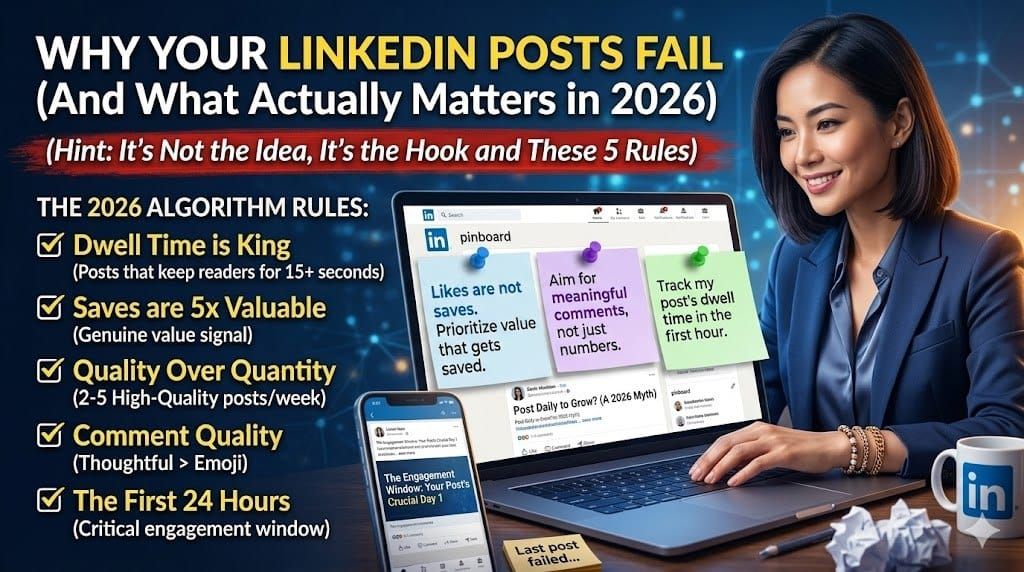
Here's what LinkedIn's algorithm prioritizes in 2026:
Dwell time is king — LinkedIn wants to keep people on the platform. Posts that make readers stop scrolling and actually read (15+ seconds of dwell time) get pushed to more feeds. The algorithm measures this by tracking how long someone spends on your post versus how long they scroll past it.
Saves are 5x more valuable than likes — When someone saves your post, LinkedIn sees it as a signal of genuine value. That post gets shown to more people. A single save can do as much for your reach as five likes, but the algorithm weights it even higher.
Quality over quantity is no longer a slogan—it's survival — The "post daily to grow" advice is outdated. LinkedIn's data shows the sweet spot is 2-5 high-quality posts per week.
Comment quality trumps quantity — A post with 20 thoughtful comments beats one with 200 emoji reactions. LinkedIn's AI now analyzes comment length and relevance.
The engagement window matters — Your post's first 24 hours are critical. If you don't get traction early, the algorithm assumes it's not worth promoting.
It's too late to notice your mistakes after you hit "post"
Most people find out their hook was weak three hours after posting, when the impressions plateau and the engagement never arrives. That's the wrong time to find out.
OmniCreator's Proofread feature reviews your draft before it goes live, including the opening lines specifically. Is the hook strong enough to hold attention? Does the first line earn the "see more" tap? Hit Optimize and the improvements apply automatically. It's the difference between publishing and hoping versus publishing and knowing.
All of this is part of OmniCreator's broader workflow: scheduling calendar, media library, AI interviewer (Starlog), and Proofread, for $20/month. The whole thing is designed to help you catch weak hooks before they go live.